
5 Tools Every Aspiring Woodworker Should Learn to Use
Every woodworker’s journey begins the same way: with curiosity, a bit of hesitation, and the desire to create something with your own hands.
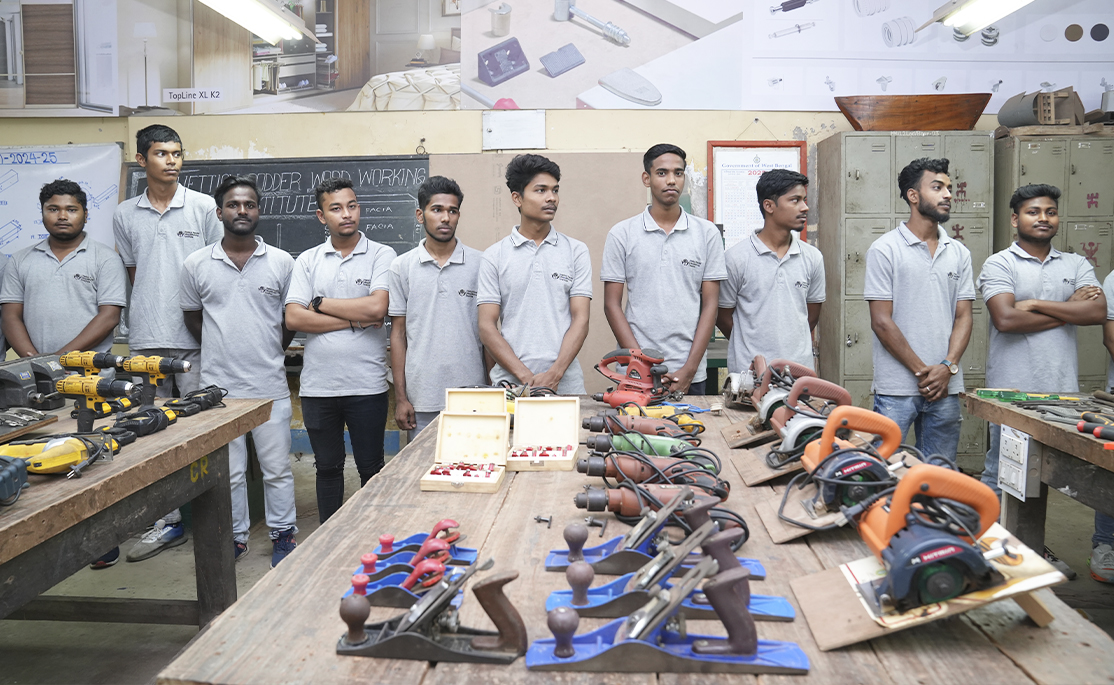
At Hettich Poddar Woodworking Institute, we’ve seen many aspiring woodworkers transform from hesitant beginners to confident creators, and the journey often begins with learning to use essential tools effectively.
Here are the five essential tools every aspiring woodworker should get comfortable with to build a strong foundation.
1. Measuring and Marking Tools –
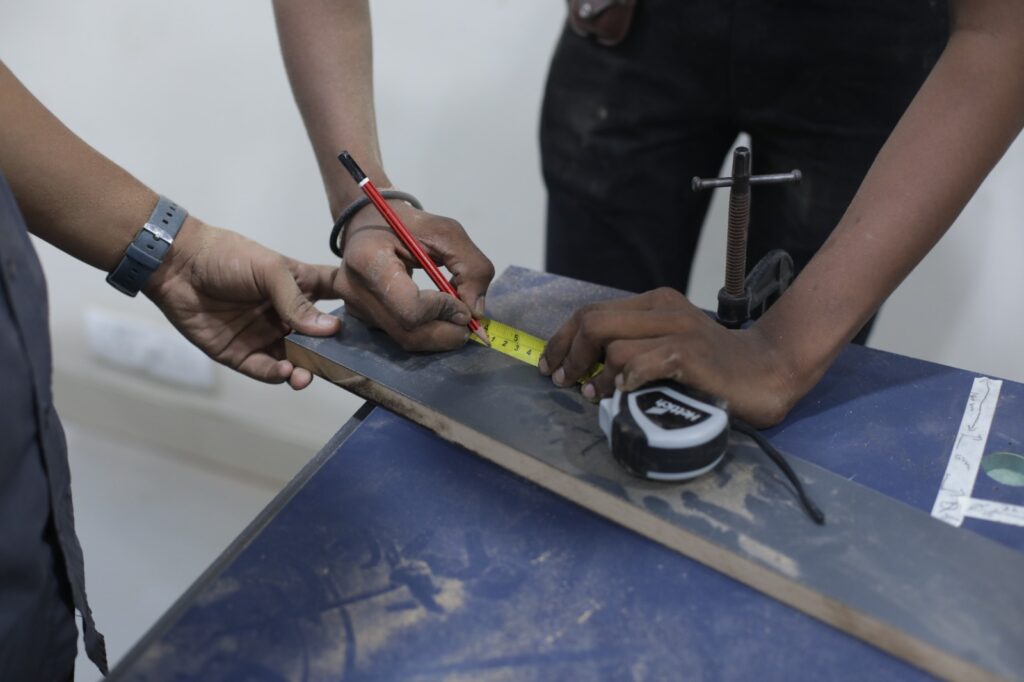
“Measure twice, cut once” is more than a saying; it’s a golden rule for a reason.
Accuracy is a non-negotiable in woodworking. And mastering tools like measuring tapes, steel rulers, combination squares, and marking gauges ensures precision in every cut and joint you make.
These tools help you transfer your design ideas onto the wood accurately, saving time, material, and frustration.
2. The Handsaw
Simple but powerful, the handsaw teaches you how wood behaves.
Whether you’re cutting boards to size or working on intricate joinery, using a handsaw helps you develop control and a feel for the material. Different saws, such as the ripsaw for cutting along the grain and the crosscut saw for cutting across it, help you understand the nature of wood better than any machine in the early stages of learning.
3. The Chisel Set
Chisels are great for shaping, detailing, and refining joints. They require patience and care, but that’s where the real learning happens. A sharp, well-handled chisel can help you create clean joints and smooth finishes. And as you practice, you’ll also develop a better eye for detail, balance, and alignment.
4. The Plane
A hand plane is used to smooth surfaces, level boards, and square edges.
At first, it may feel tricky to use. But once you get the hang of it, it can feel incredibly satisfying. Using a plane teaches you how to read the grain of the wood and lends your work that smooth, professional finish.
5. The Power Drill –
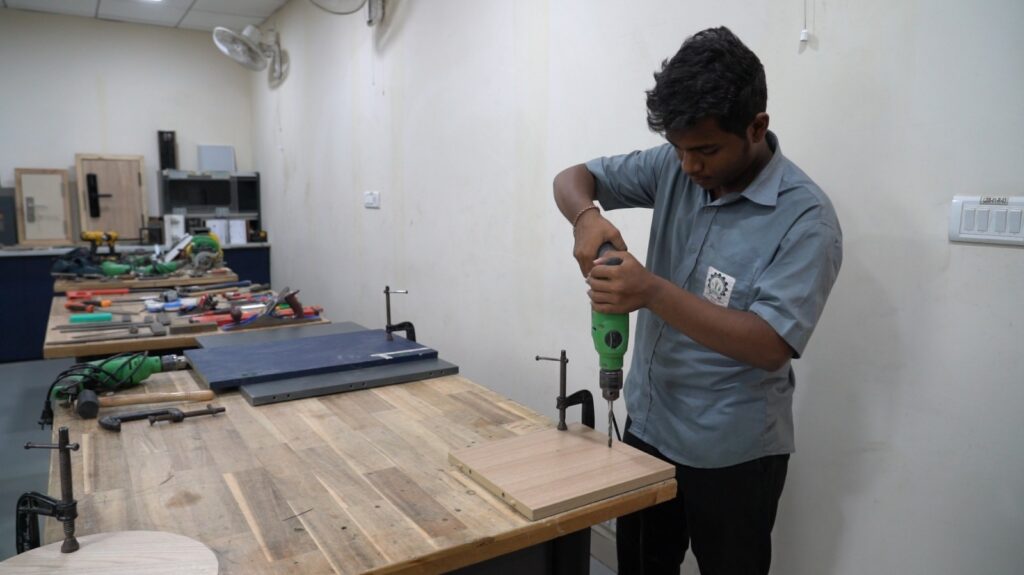
When you’re ready to move beyond hand tools, the power drill is a great next step to master efficiency and versatility. From drilling precise holes to driving screws for assembling your projects, learning how to use the power drill helps you handle a variety of tasks confidently.
Learning how to use different drill bits, adjust speeds, and work safely gives you confidence as you move on to more advanced projects.
Why These Tools Matter
At HPWWI, we believe that true craftsmanship doesn’t come from having a full workshop but from knowing how to use essential tools well.
These five tools give you the skills to approach any woodworking project with confidence, creativity, and care.
If you’re ready to start creating from your hands(and your heart), join us at Hettich Poddar Woodworking Institute.
We’ll help you master the tools, but more importantly, we’ll help you discover what you’re capable of building.